
The
eviction notice came on the heels of a tough and mournful year. The torment began
with a venomous phone call from my father. His voice was weak, but his
words cut like a knife.
"Joni, you killed your mother."
 |
| Little Joni & Daddy. |
I hung up on him. My legs buckled. I steadied myself against the wall and made it to my bed, where I collapsed.
I knew
what he meant. Mommy was gone. She was only forty-six years old, and I
was just sixteen. But was I a murderer now?
As I lay
there, still dazed from the stunning blow, the world stopped. And in that surreal
moment, a small voice in my head told me the truth. Your mother is dead, but you are not a murderer. And then I smashed
my face into the pillow and howled like a wounded animal. There could be no greater pain than this.
 |
| My Beautiful Mother |
I loved
her. And her love for me was unconditional, no matter the magnitude of the
teenage problems I laid at her feet. She was my beautiful, tall, brown-skinned
mommy with the pretty dresses and the soft, lovely voice. She was the warm hug
and gentle smile that sent me off to school every morning, and the loving
squeeze and kiss on the cheek that greeted me when I returned. She was the
strong hand that guided me through life. My rock and my protector. Asthma and
pneumonia took her away – not me. I knew it. Daddy knew it. And
later, an autopsy confirmed it.
Pain
What was I going to do now?
I curled
up into a ball, for days. My family banned me from the funeral.
They said I was too young. Too fragile. Too broken. The truth was,
they didn't want questions and whispers about my secret. My mother was the only
one who didn’t shun me for it. But she was gone. Now I’d have to get rid of the
problem, just like everybody wanted me to – wash my hands. I didn't realize my
decision would leave a bloody stain on my life, and an even deeper hole in my
heart. I needed my mother more than ever now.
Numb
She died
right before Christmas. My father walked around the apartment, singing a
song with a line I will never forget, “There will be no Christmas for
me...” And when he sang it, I heard his tortured soul crying out for her.
Sometimes he'd sing songs of hope, and recite poems about
butterflies and sunlight. He encouraged me to write. To sing. To
thrive. And a few weeks later, when I turned seventeen, he bought me a
birthday cake.
Despite
his cruel indictment of me, he didn't want me to drown in my sorrow. In
those moments, I was still his little girl.
And he was still my teddy bear daddy – my laughing, sunshine daddy – the
man who'd loved, nurtured and adored me all my life.
Now we
cried together, a lot. We were trying to get through life without her, and we
were failing miserably. I forgave him for the way he delivered the news of my
mother’s passing – I knew he didn’t mean it. Later, I realized he was
projecting his guilt onto me.
All I
could think about was my mother. I pushed my secret to the back of my mind – I couldn’t
absorb another loss. I was a zombie, just trying to make it through my last six
months of high school. I graduated, but skipped the ceremony. I couldn't
face college either – it would have to wait. I even turned down a full
scholarship to a school in Florida. I knew I barely had the strength to put one
foot in front of the other. Besides, I couldn’t leave home, because my
mother wouldn’t be there to cheer me on, to call me, or to just love me.
I'd made
a prior commitment to be a junior counselor, at a camp where I’d spent many
summers. So, six months after my mother's death, I got on a bus and headed to
the Catskills. The camp’s executive director, a loving, earth mother type,
was the only one who knew my story. I
interacted with campers and fellow counselors. I smiled. I hiked. I
sang campfire songs. I did what I had to do. But on the inside, my soul wept.
Downward Spiral
I returned home from camp, thankful for
the weekly allowance my father continued to send me all summer. I’d saved all
the money I earned at camp, and I had a tiny inheritance from my mother. It went fast. After a few months, I started
showing up at my father’s barbershop, desperate for cash.
Daddy was
losing interest in my well-being. He
kept coming home late, stumbling and reeking of alcohol. After a while, he rarely showed up. I didn’t know where he was staying – he never
brought up the subject, and I didn’t ask. Week after week, I was mostly home alone,
struggling to make it on the few dollars he gave me.
When I
was a little girl, I thought my daddy was rich. He owned a barbershop. Before
I was born, when he and my mother fled the south and came to New York, he
thought his college degree would open doors. He’d been a brilliant student. A
plaque, displayed in the lobby of his alma mater, memorialized his academic achievements.
But he ended up mopping floors. Undefeated,
he cut hair on the side, and saved his money. At the same time, he raised his
children, and doted on his wife. By the time I was in second grade, he opened
his shop. That was years ago. I no longer thought we were rich, but I still didn’t
understand why money was so tight.
Soon, my
frequent trips to the barbershop got ugly. My father was always angry when I
showed up. He’d dig into his pocket, and
throw a fist full of money at me. I’d try to catch the bills before they
hit the floor, and I crawled around to pick up the coins. I needed every penny. There were times when he’d chase me out of the shop, empty
handed. I never knew what to
expect. One day he pulled a knife on me. Oh. My. God. I ran for my life, but I came back after a few days. I had no choice. I’d pray that he’d have a
customer in the chair, but who would take a haircut from a drunken barber? The
shop was usually empty. I didn’t realize he was running the customers away. The
man who was my daddy had become an alcohol-fueled monster.
--------------------------------------------------------------------------------------------------------------
Eviction
Then it happened.
The eviction notice was taped to the apartment door.
I had
never seen or paid a bill in my life. I’d taken everything for granted. I
panicked.
I called
my father. He slurred some words into the phone, and hung up. Something told me
he was never coming back home. The weight of the eviction was solely on me.
I took
the scary notice to my girlfriend Sherri’s house, so I could show it to her
mother, Mrs. Lake. I needed an adult to weigh
in on it. She knew about my mother’s passing, and I filled her in on my father.
She sat at her dining room table and read the eviction notice. I watched the
color drain from her pretty face. She said the back rent had to be paid or
I’d have to get out in thirty days, and all our belongings would end up on the
sidewalk. And then she said nothing. I could see she was worried. She was known for her big, beautiful smile –
she was always a ray of sunshine, no matter what. There was no smile on her
face now. She handed the paper back to me, telling me how sorry she was. We
were both speechless as I walked out of her apartment and headed home.
I went to
bed and curled up into a ball, and I stayed there, for days.
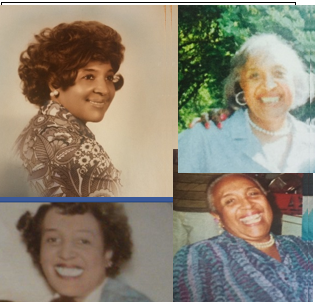 |
| The lovely Mrs. Lake, over the years. |
Just days
before our belongings were tossed out, the phone rang. It was Mrs.
Lake. She asked me to stop by. I needed food, so I went. I got a nice meal,
and something else that I will never forget.
She
asked, “Would you like to come and live with us?”
My emotions
overwhelmed my voice. We hugged.
When I got myself together, I thanked her as I choked back tears. I felt relieved, but terrified. I went
home and packed my clothes.
It was
late summer. I felt the warmth of the sun on my face
as I walked out of my
building, lugging my suitcases. I wondered when our furniture would be put out
on the sidewalk. And then I pushed my feelings way down into a dark place, for
a long, long time.
 |
| Mr. & Mrs. Lake |
I walked
to Mrs. Lake’s building, which was just steps away. When she opened her door and let me in, her
beautiful smile was back, but like me, she was speechless.
My
girlfriend Sherri had just left for college, so Mrs. Lake gave me her room. Sherri's younger sister, who was still in junior high school, had her own
bedroom too. We didn’t have much to say to each other. I was
functioning, but not feeling.
Most
nights when I lay alone in Sherri’s bed, my mind raced. This isn’t my bed. What am I
 |
| Motherless, Teenage Me. |
doing here? I can’t do this. What happened
to me? Then I started hearing voices at night. It was always someone
calling out my name. Joni. Joni. Joni.
I told Mrs. Lake about it, because I sensed that I was losing my mind. She said it
was probably one of the kids in the apartment upstairs, trying to spook me. She was wise to find a rational explanation, but
I wondered if she really believed what she was saying. Looking back, I cannot
imagine what was going through her mind. Her face was calm and reassuring, but
I’m sure she was worried about me, and about what she’d gotten herself into. After a few weeks of torture, the voices
stopped. But I was still very troubled. I worked harder on shoving my feelings
way down, deeper, and deeper.
I was robotic
and needy at the same time. I asked Mrs. Lake to send me to college. I shared my dreams and goals and asked her to
finance all of them. I didn’t realize
she and her husband were doing their best to raise their own daughters, and get
them through college. By taking me in, they’d saved my life, and disrupted
theirs. But I thought I’d automatically become a member of their family. Mrs.
Lake knew it, yet she never dismissed my requests – she didn’t hit me with the
truth. She always said she’d think about
it. Then she gently suggested that I get a job, just so I could have my own pocket
money. That was okay by me. But I still
didn’t realize the Lakes were not my substitute parents.
Jobs were
plentiful - I found work without much effort.
But I was young, inexperienced, and not ready for the customer service
job I’d landed at the phone company. I refunded customers without reviewing
their accounts – I took them at their word. It wasn’t long before I got
fired.
I started
working long term temporary jobs, doing repetitive work, like stuffing
envelopes. With everything that was on
my head, it was all I could manage.
Once I
was working and appeared to be adjusting, Mrs. Lake gave me tiny goals – like
buying my own toothpaste and toiletries. Or at least buying laundry detergent,
since she was the one who was washing the clothes. She was trying to teach me how to be
independent. I needed to understand I was a boarder in her home. She was very nurturing and gentle as she tried
to nudge me into a reality that I still wasn’t ready to accept. She was a mom – but not my mom. Her talk didn’t
work. I had been through too much. I wanted my mommy, and if I couldn’t have
her, then I needed Mrs. Lake to be my mom. I also didn’t do all the things she suggested.
So, I ended up feeling guilty, and then I pushed the guilt way down deep.
I didn't
know Mrs. Lake was an angel. I didn't know I would cherish her for the
rest of my life. I didn't know her gift was so special that I could never thank
her enough. I didn't know that years later, whenever I saw her, I'd get a
lump in my throat. I didn't know she would pass away before I could tell her how
grateful I was for what she did, and how much I loved her. I remain eternally
grateful, and forever touched by her kindness, and her grace.
About a
month after I’d moved in, I was chatting with Mrs. Lake and I mentioned
something about one of my aunts. Mrs.
Lake was shocked – she’d assumed I had no relatives. But my mother had eleven
siblings, and most of them were married and living in New York, in nice homes.
I never thought of reaching out to them. It never occurred to me – my parents
always took care of everything. Mrs. Lake picked up the phone and called every
aunt, and every uncle.
PTSD
They set
up a meeting at an aunt’s house. Not
only did every aunt and uncle show up, but my sister B.J. and her husband were
there too. They were all sitting in a circle when we arrived. Mrs.
Lake explained how I’d been evicted, and that she’d been caring for me ever
since. She said she couldn’t imagine how I felt, and she was glad she was able
to help. She smiled as she spoke, and she kept that beautiful smile on her
face, as my family thanked her. I’m sure she expected someone to say
they’d take me in. That didn’t happen. They passed a hat, filling it with
money for Mrs. Lake, as a thank you for her troubles. She must have been
shocked, but she just kept smiling. The meeting was over. I left
more dazed than I was when I walked in.
I was
traumatized by that family meeting. For many years, family gatherings were difficult
for me. I’d feel sheer terror. I was always waiting for that terrible blow, or
for the hat to be passed around in front of my face, making me feel worthless. Year
after year, I showed up at family reunions, parties, and holiday gatherings. I
relived that awful day, over, and over, but I smiled through the pain until the
feelings passed. Sometimes I started reliving it on the way to the gathering,
or the night before. Nobody knew what I was
going through. I showed up because I loved and needed my family. I forgave
them. My cousins knew nothing about my ordeal. And my aunts, uncles and sister didn’t
know they’d almost killed me that day.
There will be no Christmas...
My friend
Sherri came home from college for Thanksgiving and Christmas. The holiday
season brought unspeakable pain to me. It marked the anniversary of my
mother’s passing. I stood around, saying very little. I was an outsider. The
Lake’s friends and relatives were eating, drinking, exchanging gifts, and just
enjoying each other. I couldn’t wait for it to be over. I was glad when Sherri went back to college. I loved my dear friend, but when she was around, my
feelings surfaced, and a sense of worthlessness, embarrassment and humiliation overwhelmed
me. She was my mirror. When I saw her, I knew we were no longer
equal. I was a homeless urchin, sleeping
in her bed. I lived at the mercy of her parents.
I was troubled. She had a bright future and a family. She could laugh. She
could dance. She could smile.
Growing Up
Mrs. Lake
never asked me to leave, but after Christmas, I felt it was time to go. I was
only eighteen years old, and damaged, but I wanted my own bed – my own
room. I didn’t want to be an outcast
anymore. I realized I’d never recapture the life I had before my mother passed
away. I was growing up.
That
winter, I struck out. I found a room in a cheap, old, Single Room
Occupancy Hotel (S.R.O) on the Upper West Side. The manager was reluctant to
rent to me – he could see I was just a kid. So, I lied about my age, and he never
asked for ID. He took my money. I rented a single room, no bath.
My room
smelled stale. The wallpaper was faded. The carpet was threadbare, and the
curtains were old. I had a small refrigerator, a hot plate, a bed, and a
television. I seemed to be the youngest tenant among a ragtag group of people
who all appeared to be down on their luck.
The
bathroom made my skin crawl, and having to share it with an old woman made it
worse. The tiles were cracked and dirty,
the shower curtain was moldy, and there were always dead roaches on the floor. A
housekeeper was responsible for keeping it clean, but no amount of scrubbing
could remove years of soap scum and gunk. I know. I tried. I felt sick every time
I showered, and I cringed if the toilet seat was still warm when I sat
down. I hated it.
I was
living in a disgusting environment that was not meant for a young girl like me,
but I learned to deal with it. Because when I closed the door to my room, it
was all mine. And that felt good.
I went to
work every day, and kept to myself. I got locked out of my room a few
times, because I couldn’t pay the rent. I was still working on temporary
jobs, and I was struggling.
When they
locked me out, I'd go stay with my daddy, who was living with a woman in
Harlem. Her name was Mrs. Palmer.
She wore shabby dresses and loved to drink beer, but she was very nice
to me. I got dinner and a place to stay,
until I saved up enough to pay the rent at the hotel. Mrs. Palmer was my father’s drinking buddy,
and more. I didn’t care. For the time I was there, they were my parents, and that
was heartwarming.
Still I Rise*
After
nearly three years in the S.R.O, and six months at my sister B. J’s house, I got
my first apartment. It was a tiny studio in a tenement in Hell's Kitchen,
but it was mine. At twenty-one years of age, I was starting a new
chapter in my life.
My losses,
including my secret, still haunted me. I had no mother. My father
was a shell of a man. Later, he was found dead, lying in a dark, dirty
alley somewhere in Harlem, like a bum. He was only in his fifties. I was
inconsolable at his funeral.
 |
| Me, at about 21. |
I held on to memories of the sweet,
honorable man who raised me. And I cherished the good years I had,
growing up with two loving parents, and my sisters, before it all fell
apart. Those memories got me through tough years when I had no support.
Sherri moved to another state, but we remain friends, for life. Her mother,
Mrs. Lake, will forever be in my heart and mind. Over time, my sister B.J. and
I bonded, and we were inseparable, until her passing. She was my rock, and I
was hers. But only time would ease the pain of my insurmountable losses.
Some
family members predicted that without parents, I would spiral downward, and
never make anything of my life. I knew better. A college degree, a fine
career, artistic expression, and healthy relationships followed. I kept reaching
higher, and higher. And I’m still climbing.
*Dr.
Maya Angelou


